Open source RGB lighting control that doesn't depend on manufacturer software


One of the biggest complaints about RGB is the software ecosystem surrounding it. Every manufacturer has their own app, their own brand, their own style. If you want to mix and match devices, you end up with a ton of conflicting, functionally identical apps competing for your background resources. On top of that, these apps are proprietary and Windows-only. Some even require online accounts. What if there was a way to control all of your RGB devices from a single app, on both Windows and Linux, without any nonsense? That is what OpenRGB sets out to achieve. One app to rule them all.


Version 1.0rc2, additional downloads and versions on Releases page

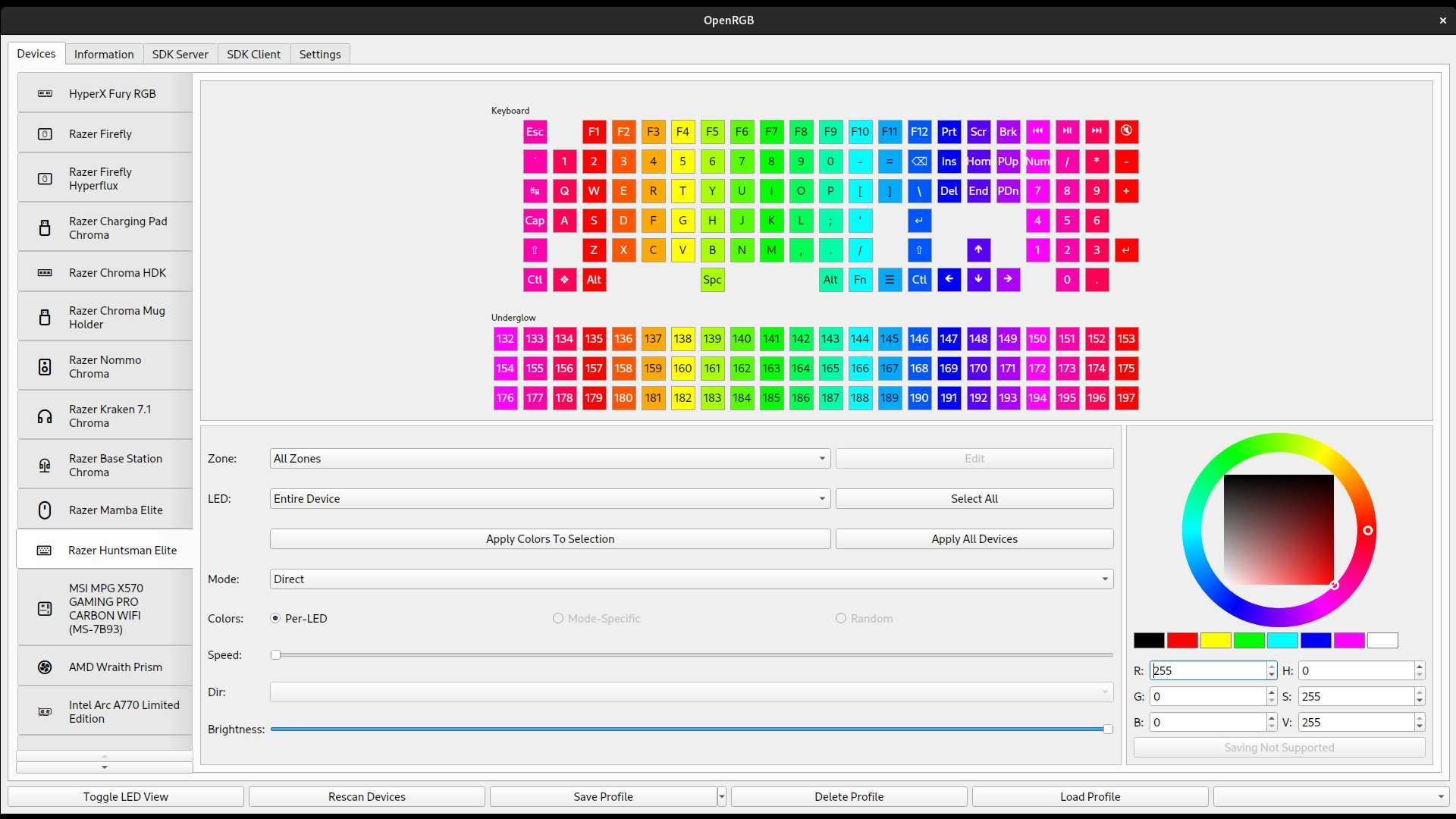
OpenRGB user interface

Control RGB without wasting system resources

Lightweight User Interface

OpenRGB keeps it simple with a lightweight user interface that doesn't waste background resources with excessive custom images and styles. It is light on both RAM and CPU usage, so your system can continue to shine without cutting into your gaming or productivity performance.
OpenRGB rules them all

Control RGB from a single app

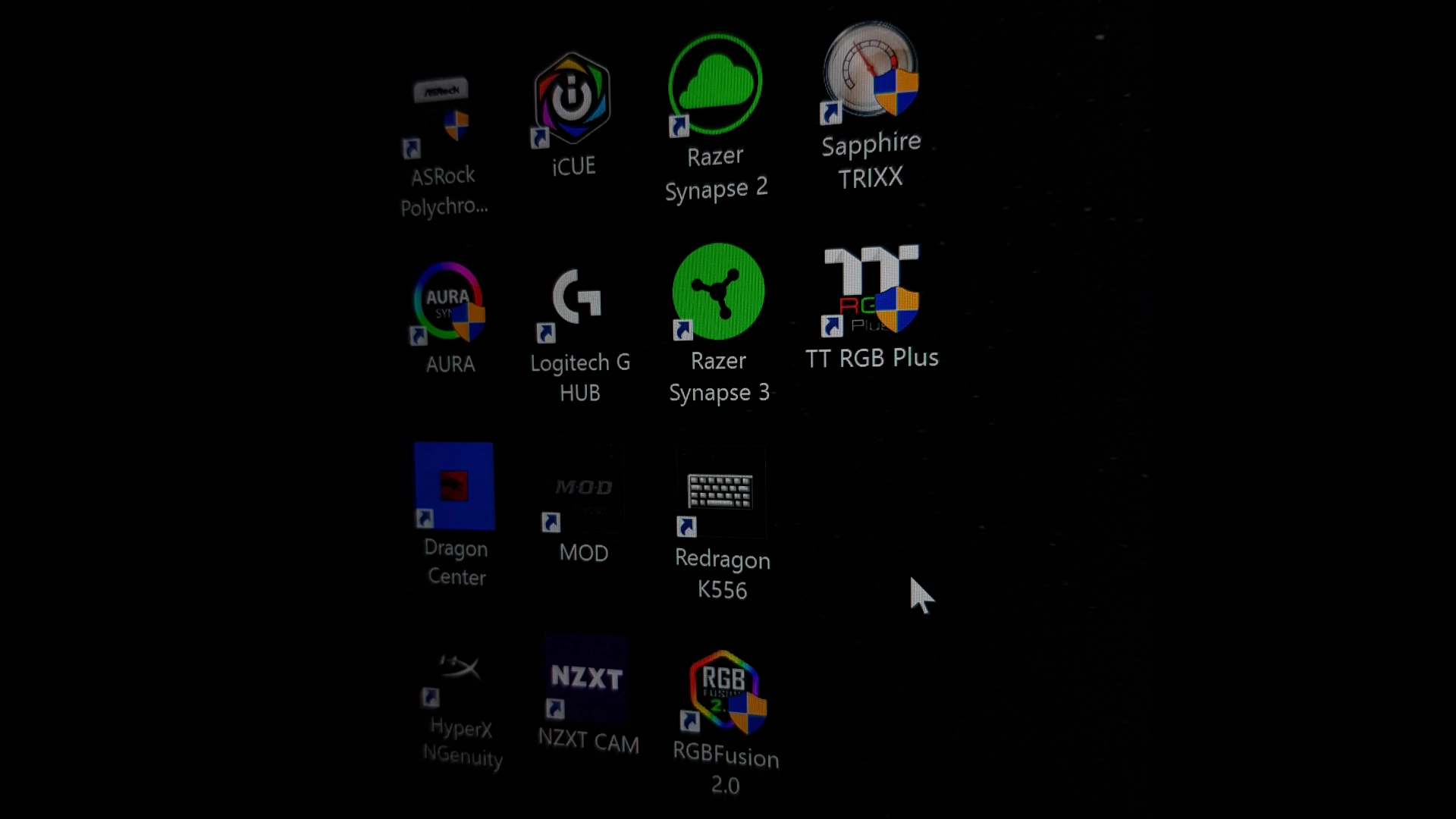
Eliminate Bloatware

If you have RGB devices from many different manufacturers, you will likely have many different programs installed to control all of your devices. These programs do not sync with each other, and they all compete for your system resources. OpenRGB aims to replace every single piece of proprietary RGB software with one lightweight app.

OpenRGB is open source software

Contribute your RGB devices

Open Source

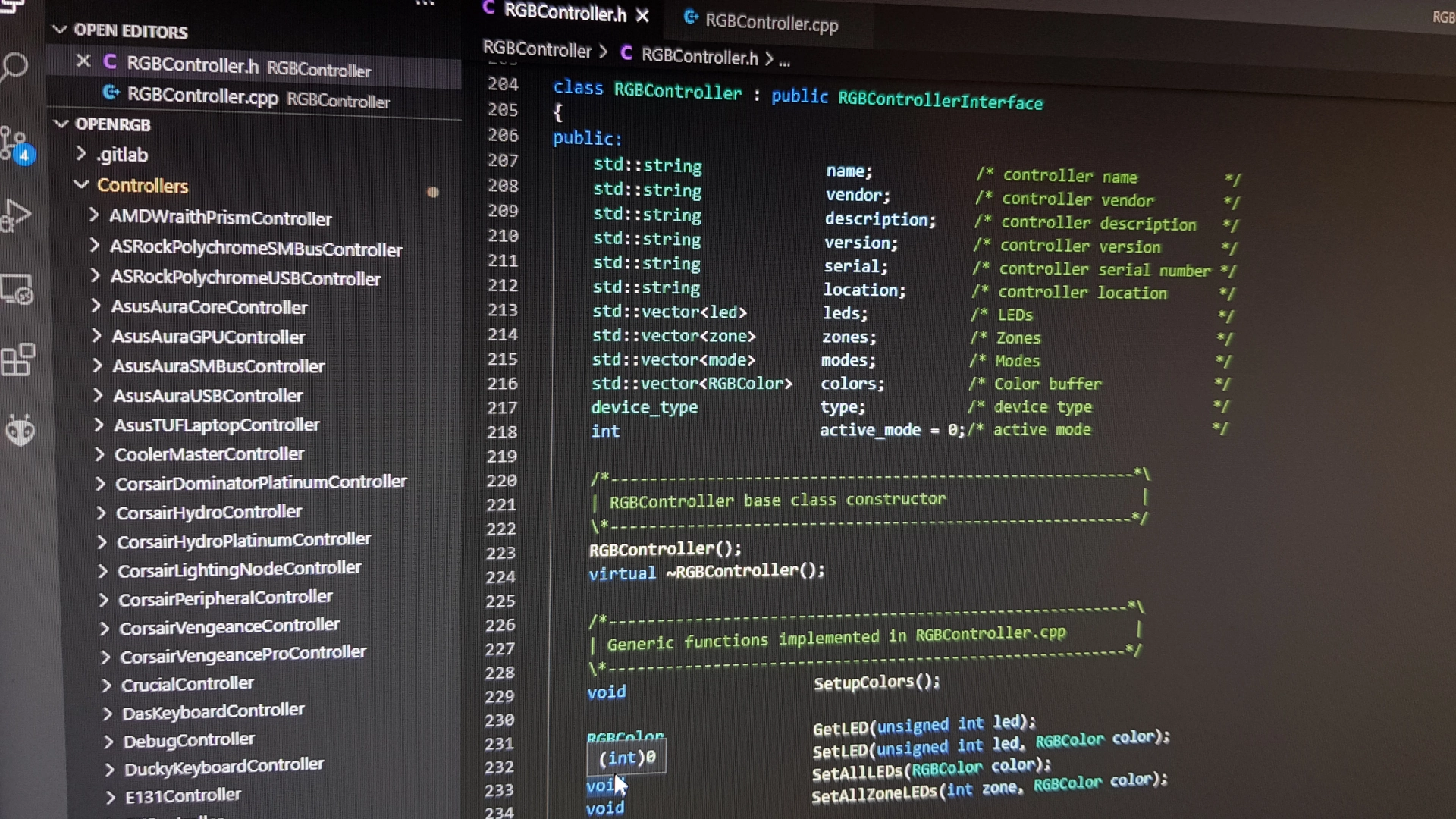
OpenRGB is free and open source software under the GNU General Public License version 2. This means anyone is free to view and modify the code. If you know C++, you can add your own device with our flexible RGB hardware abstraction layer. Being open source means more devices are constantly being added!


Check out the source code on GitLab
OpenRGB is Cross-Platform

Control RGB on Windows, Linux, and MacOS

Cross-Platform

OpenRGB runs on Windows, Linux and MacOS. No longer is RGB control a Windows-exclusive feature! OpenRGB has been tested on X86, X86_64, ARM32, and ARM64 processors including ARM mini-PCs such as the Raspberry Pi.

Bgmi 90 Fps Config File Upd Download Updated

In the electric hush before dawn, a community of players woke with one shared itch: to feel the game move like liquid. For many of them, BGMI — the battle-royale arena where milliseconds decide fate — had always run at 60 frames per second on most devices, a stable pulse but not the razor edge some players hungered for. Rumors rippled through forums and chat groups about a hidden threshold: 90 FPS. The idea was intoxicating — smoother aim, clearer motion, an advantage both subtle and decisive. Prologue: The Hardware and the Hunger The story begins with hardware stepping forward. A new generation of phones boasted 90Hz and 120Hz displays, improved thermal designs, and GPU drivers that could sustain higher frame rates. Players with these devices found themselves outside the official settings: the in-game menu stopped at 60 FPS. The community, impatient but ingenious, looked elsewhere — to configuration files, device shells, and developer builds. Act I: Discovery in the Files An enterprising player unearthed a snippet: a config file that BGMI read at launch. It contained parameters that controlled render rates, frame caps, and performance presets. Changing a value from “60” to “90” seemed almost too simple — and yet it hinted at the possibility that the game engine could render beyond the GUI’s limits if the device and software cooperated.