vs
Okay, putting all these ideas together, the paper should provide a comprehensive overview of Caselaw.vn, its context in Vietnam's legal system, its features, impact, challenges, and future potential. Make sure to highlight its role in Vietnam's legal reforms and digital transformation.
I should also touch on the cultural aspects. In a country with a centralized government, making court decisions public might be part of a transparency strategy. How does this align with Vietnam's broader goals, like joining international treaties requiring legal transparency?
I should consider why Vietnam would develop such a platform. Perhaps to increase judicial accountability, improve legal research efficiency, or support legal education. Maybe there's a government initiative to modernize the judiciary. Also, how does this compare to similar platforms in other countries? For example, PACER in the U.S. or the European Court's database. Are there any unique challenges in setting up a case law database in Vietnam, especially regarding data collection and standardization?
I should also think about user statistics—how many cases are on the platform, how many unique visitors, and any feedback from users. Are there any notable cases that have been referenced in Caselaw.vn that have set precedents or been particularly impactful? caselaw.vn
Lastly, think about future implications. As AI and legal tech develop, could Caselaw.vn incorporate AI tools to predict legal outcomes based on past cases? How might that change legal practice in Vietnam?
Also, think about the international aspect. Does Caselaw.vn have any partnerships with international legal organizations or universities? Could it support research into Vietnamese law for foreign students or practitioners dealing with cross-border legal issues?
Another thought: the digital divide in Vietnam. While urban centers might have good internet access, rural areas may not, so the accessibility of the platform could be limited for some. How does Caselaw.vn address this? Do they offer offline versions or other access methods? Okay, putting all these ideas together, the paper
Potential issues: quality of data entry, completeness of the case law available, potential biases in the cases collected, and accessibility for the average person. Also, how secure is the database? Are there privacy concerns, especially in civil cases?
I need to ensure that I have credible sources. Maybe look for official Vietnamese legal documents, press releases from the Supreme People's Court of Vietnam regarding the launch of Caselaw.vn, academic articles on Vietnam's legal systems, and possibly some case studies or user testimonials.
Legal scholars might use this database for empirical legal studies. How has the availability of case law data influenced legal research in Vietnam? Are there any academic papers or reports that have cited cases from Caselaw.vn? In a country with a centralized government, making
Caselaw.vn likely serves as a centralized repository for court decisions. I need to explore its features: maybe it offers searchability by keyword, jurisdiction, date, or subject area. It might also provide summaries or annotations for cases, making it more useful for legal professionals. Also, think about the target audience—lawyers, legal scholars, students, or even the public?
Another angle is the impact of such a platform on Vietnam's legal reform. By making past decisions accessible, it can influence how judges apply the law more consistently, which could be a step towards de facto case law. Maybe discuss any legal reforms in Vietnam related to incorporating case law, such as the 2015 Civil Code or 2019 Administrative Code, and whether they mention the use of court decisions.
I should look into the legal landscape of Vietnam. I remember that Vietnam has a socialist legal system, but they have been incorporating more elements from civil law. The judicial system is based on written statutes, so the role of court decisions isn't as binding as in common law systems. However, there's been a push for transparency and access to legal information, especially with the internet.
Caselaw.vn represents a pivotal shift in Vietnam's legal ecosystem, offering a centralized digital repository for court decisions. This paper explores its establishment, features, impact on legal practice, and implications for Vietnam's evolving legal reforms. By analyzing its role in enhancing transparency, judicial accountability, and legal research, we illuminate how Caselaw.vn aligns with broader governmental and societal goals. 1. Introduction: The Role of Case Law in Vietnam Vietnam, a civil law state, traditionally relies on statutory law rather than precedent. However, the digital age is redefining legal practices. Caselaw.vn emerges as a response to growing demands for judicial transparency and accessible legal information. This paper examines how this platform bridges the gap between Vietnam's socialist legal system and global trends in digitizing case law. 2. Vietnam’s Legal System and the Need for Caselaw.vn Vietnam’s legal framework is rooted in civil law, with the Supreme People’s Court serving as the ultimate authority. Recent reforms, such as the 2015 Civil Code and 2019 Administrative Code, hint at a gradual shift toward judicial consistency. Caselaw.vn complements these efforts by providing a searchable database of court decisions, enabling judges and practitioners to reference analogous cases—a de facto step toward a case law tradition.
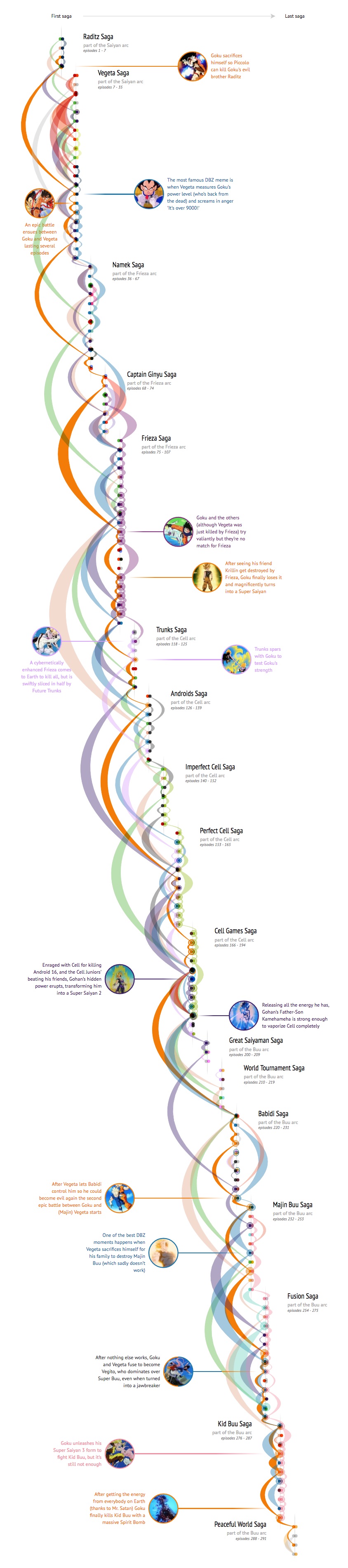
Extra interactivity on desktop The visual above is just an image, but on a large screen you see the full interactive and get the option to hover over each of the fights and character paths to see extra information about the fight; who was fighting whom, what was special about the fight and in what other battles did these characters fight.

Check it out behind your laptop / desktop as well for an even more detailed look into all fights that happened in Dragon Ball Z.
The fight info was taken from the Dragon Ball Wikia pages for each saga. For relevance, a few fights were taken out of the above visual; the Garlic Jr. and Other World Tournament filler sagas were completely removed. Also the ±5 fights that happened in the anime only and didn't feature any of the Z fighters, happened in a nightmare or flashback were taken out.
Created by Nadieh Bremer | Visual Cinnamon
Data from the very extensive Dragon Ball Wikia | Read about the design process in this blog