
Advanced spell checking
Expert proofreading
Accurate translation
Instant in-place ChatGPT answers

Works with these apps and many others








GPT Tools lets you spellcheck text inside any program that doesn't support spellchecking. With the power of GPT Tools, you can spellcheck any of the 76 languages supported by ChatGPT.

Write text as well as you can, and then the tool will elevate it to the fluency of a native speaker. Utilize the mighty potential of ChatGPT, which has currently mastered an impressive 76 languages.
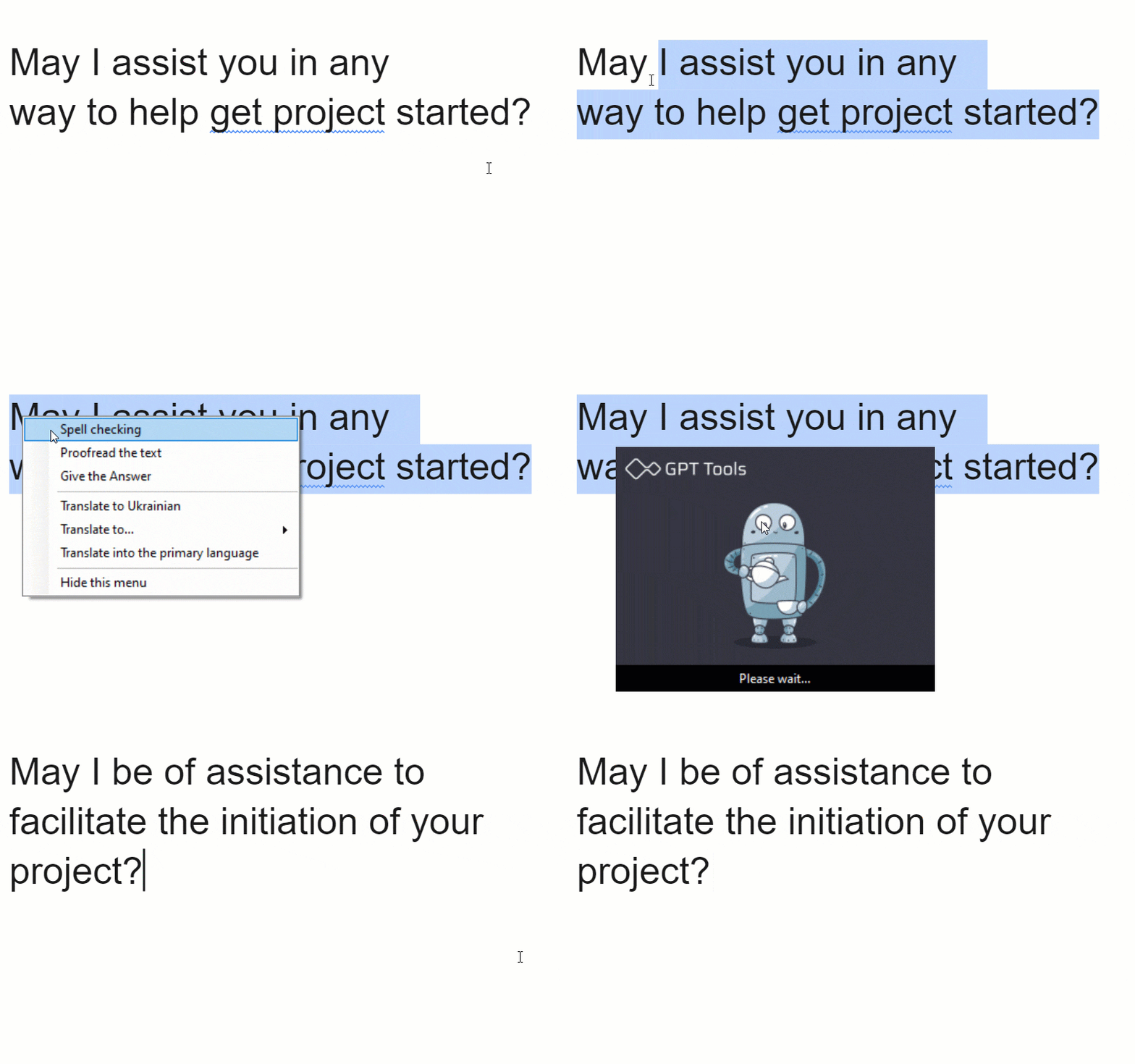
Your text gets translated in a few seconds right where you wrote it, for example, in a chat or a document.

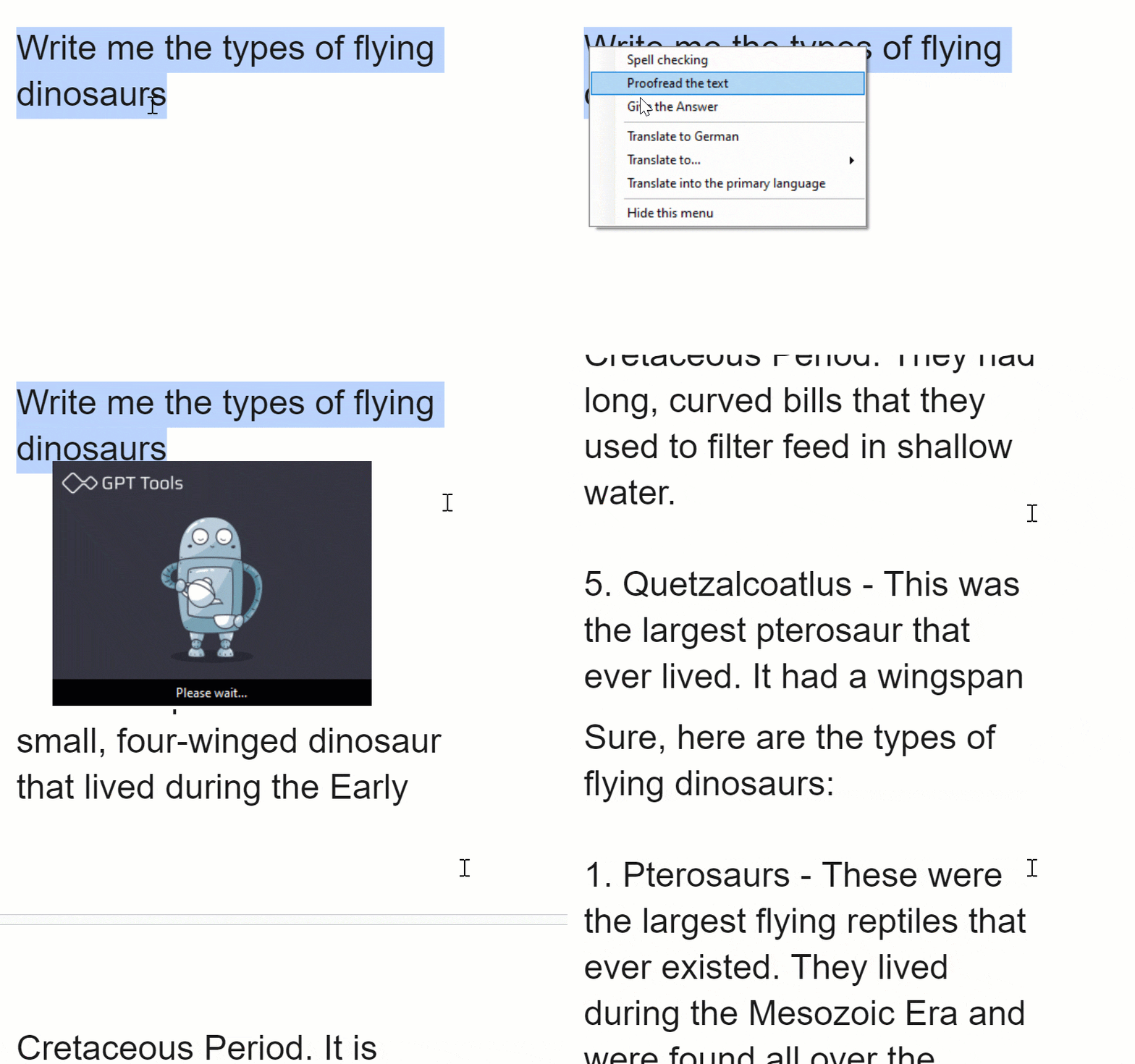
Just type your question anywhere, and GPT Tools will replace your question with the answer from ChatGPT.
The need for standardized logistic publications arose from the complexities of multinational military operations, where diverse national logistics systems and procedures often hindered effective coordination. In response, NATO developed STANAG 2174 to provide a common framework for the publication and exchange of logistic information. This standard enables NATO forces to operate together efficiently, ensuring that logistics support is provided in a timely and effective manner.
The Allied Logistics Publication, STANAG 2174, is a standardization agreement (STANAG) established by the North Atlantic Treaty Organization (NATO) to standardize the publication and interchange of logistic information among its member countries. The agreement aims to facilitate interoperability, efficiency, and accuracy in logistics operations, ensuring seamless communication and coordination across national boundaries. stanag 2174
STANAG 2174 plays a critical role in standardizing the publication and interchange of logistic information among NATO countries. By providing a common framework for logistic publications and data interchange, this standard enables more efficient, accurate, and effective logistics operations, supporting the success of multinational military operations. Ongoing adherence to STANAG 2174 ensures continued interoperability and efficiency, aligning with NATO's commitment to facilitating seamless cooperation among member countries. The need for standardized logistic publications arose from