
The Great Pyramid By Doreal | Pdf Fixed
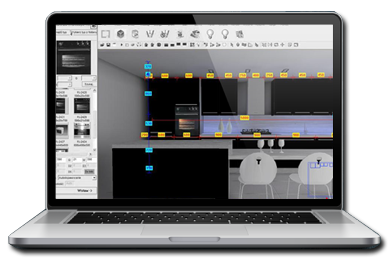
Professional Kitchen & Wardrobe Design Software. KDMAX is simple and affordable Powerful Design Software.
Professional Kitchen & Wardrobe Design Software. KDMAX is simple and affordable Powerful Design Software.
If I find that the book is one-sided, lacks scholarly references, and presents speculative ideas without critical analysis, that's a negative review. Conversely, if it provides a well-researched, balanced view with proper citations, it's a positive review.
The book cites some primary sources (e.g., tomb inscriptions, Herodotus) and archaeological studies, but many claims lack rigorous sourcing. For instance, assertions about the Pyramid’s mathematical precision or symbolic alignments are sometimes presented without peer-reviewed corroboration. Critics may point out the use of "debunked" theories (e.g., the "missing chamber" controversy) and cherry-picked data to support speculative hypotheses. A bibliography or footnotes would have strengthened the work, but the current edition appears self-published with inconsistent citations.
Structure: How is the book organized? Does it have a clear thesis, logical sections, and a coherent argument? Poorly structured books can lose the reader, while well-structured ones make complex topics accessible.
Lastly, I need to structure the review in a way that's informative and helpful, outlining key points in a summary format, perhaps with a rating system or clear sections like content analysis, research quality, etc.
Doreal’s work centers on the Great Pyramid of Giza, exploring its history, construction, and cultural significance. The book appears to blend mainstream archaeological facts with speculative theories. While it touches on established aspects (e.g., engineering techniques, historical context), a notable focus is placed on alternative ideas, such as the Pyramid as a "cosmic calculator" or a spiritual/technological artifact. The author challenges conventional narratives, suggesting advanced ancient knowledge or non-Egyptian origins, which could intrigue readers but risks straying into pseudoscientific territory.
Audience: Who is the target audience? Is it for general readers, scholars, or enthusiasts? The tone and depth of the content should match this. For example, a popular book might avoid overly technical jargon, but if it's academic, it should expect a certain level of prior knowledge.
Now, the user mentioned "PDF Fixed." Fixed PDFs typically refer to reflowable or fixed-layout. Maybe the original had formatting issues, like images out of place, and someone fixed it. That might not be relevant to content quality but could be a point about the publication quality. However, the user's main request is about the content review.
Credibility: Is the author an expert in Egyptology or archaeology? Or are they an outsider with no established credentials? The latter can be a red flag for pseudoscience.
Next, the user wants a solid review. So I should consider different aspects: content, research quality, credibility, structure, and audience. Let me break it down.
The PDF is organized into thematic chapters, such as construction techniques, symbolism, and modern conspiracy theories. The writing is accessible to general readers, avoiding excessive jargon, and includes diagrams/illustrations. However, sections on speculative theories meander without a cohesive argument, and the "PDF Fixed" format occasionally suffers from formatting hiccups—images misplaced or low-resolution scans—hindering readability.
Upgrade from Kdmax version 4 to 10
Rs. 55,000/- (Plus GST)
Offer Price
Rs. 45,000/- (Plus GST)
Upgrade from Kdmax version 5 to 10
Rs. 50,000/- (Plus GST)
Offer Price
Rs. 40,000/- (Plus GST)
Upgrade from Kdmax version 6 to 10
Rs. 45,000/- (Plus GST)
Offer Price
Rs. 35,000/- (Plus GST)
Upgrade from Kdmax Version to Kdmax 10 Design + Cutlist Version
Rs. 60,000/-(Plus GST)
Offer Price
Rs. 50,000/-(Plus GST)
✓ One Time training is complimentary due sign up
✓ Additional Full Training Per User will Cost Rs. 20,000/-*
✓ One time Per Hour Training will be @Rs.2500/-*
Full of advantages
If I find that the book is one-sided, lacks scholarly references, and presents speculative ideas without critical analysis, that's a negative review. Conversely, if it provides a well-researched, balanced view with proper citations, it's a positive review.
The book cites some primary sources (e.g., tomb inscriptions, Herodotus) and archaeological studies, but many claims lack rigorous sourcing. For instance, assertions about the Pyramid’s mathematical precision or symbolic alignments are sometimes presented without peer-reviewed corroboration. Critics may point out the use of "debunked" theories (e.g., the "missing chamber" controversy) and cherry-picked data to support speculative hypotheses. A bibliography or footnotes would have strengthened the work, but the current edition appears self-published with inconsistent citations.
Structure: How is the book organized? Does it have a clear thesis, logical sections, and a coherent argument? Poorly structured books can lose the reader, while well-structured ones make complex topics accessible.
Lastly, I need to structure the review in a way that's informative and helpful, outlining key points in a summary format, perhaps with a rating system or clear sections like content analysis, research quality, etc.
Doreal’s work centers on the Great Pyramid of Giza, exploring its history, construction, and cultural significance. The book appears to blend mainstream archaeological facts with speculative theories. While it touches on established aspects (e.g., engineering techniques, historical context), a notable focus is placed on alternative ideas, such as the Pyramid as a "cosmic calculator" or a spiritual/technological artifact. The author challenges conventional narratives, suggesting advanced ancient knowledge or non-Egyptian origins, which could intrigue readers but risks straying into pseudoscientific territory.
Audience: Who is the target audience? Is it for general readers, scholars, or enthusiasts? The tone and depth of the content should match this. For example, a popular book might avoid overly technical jargon, but if it's academic, it should expect a certain level of prior knowledge.
Now, the user mentioned "PDF Fixed." Fixed PDFs typically refer to reflowable or fixed-layout. Maybe the original had formatting issues, like images out of place, and someone fixed it. That might not be relevant to content quality but could be a point about the publication quality. However, the user's main request is about the content review.
Credibility: Is the author an expert in Egyptology or archaeology? Or are they an outsider with no established credentials? The latter can be a red flag for pseudoscience.
Next, the user wants a solid review. So I should consider different aspects: content, research quality, credibility, structure, and audience. Let me break it down.
The PDF is organized into thematic chapters, such as construction techniques, symbolism, and modern conspiracy theories. The writing is accessible to general readers, avoiding excessive jargon, and includes diagrams/illustrations. However, sections on speculative theories meander without a cohesive argument, and the "PDF Fixed" format occasionally suffers from formatting hiccups—images misplaced or low-resolution scans—hindering readability.
Visualization made in KD Max












✓ OS: Microsoft Windows Windows 10 64bit & Windows 11 64bit
✓ CPU: Intel i5 10th Generation and Above
✓RAM: Minimum 8 GB and Above
✓DVDROM: 8x or faster
✓ Video Card: Dedicated Nvidea 2024 Mb video memory
✓ Monitor: Resolution of at least 1024 x 768
✓ Broadband Internet connection is required to download models and updates and 35MBPS Stable Speed to Run Cloud Render
Designing kitchens? Arranges the interior? Let'S Talk!