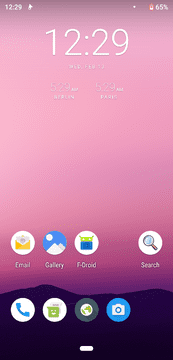
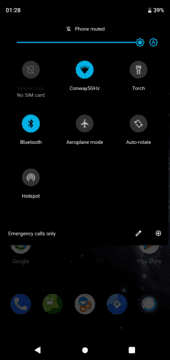

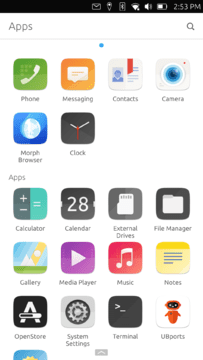
Even though we encourage you to build for your own device - and learn a lot in the process! - we realize that not everyone has the luxury of a fast computer.
This page contains a collection of public builds that the developers in this community provide.
Table of Contents
People noticed who received good names and who did not. Those favored by Arthur's ink slept as others did not, waking with a faint sense of gratitude for reasons they could not name. Tenants began to refer to him with a new kind of fear — not outright hostility but a deferential, almost legal respect. They knocked less and came to him with more than leaks: "Can you make sure my sister's room remains as it was?" "Please, Mr. Keene, see that the bedroom door closes tonight." They asked for the currency of his power and paid him in tiny favors: old photographs, half-full jars of preserves, a promise to water a fern when he worked the late shift.
Sometimes, late, a child would wake and say the one thing that made the landlord's heart quake: "Daddy, why is the man with the keys sleeping in our hallway?" The parents would hush the question with soft rationales. They would tell the child about duty, about people who work late, about the way buildings need caretakers. The child would nod, eyes bright with a comprehension no adult could sustain.
The city around Highland House hummed with its ordinary grimness: trucks, late-night bistro laughter, neon signs that presented their colors like bribes. The building, buffered against the world by its rituals, continued to ask for the one thing costlier than ink: consent. Arthur's hands, now old in a way that made his bones remember a different climate, hovered above the page. He traced the loop of his own last name, thinking of the years stacked like receipts. He imagined a day beyond the ledger in which doors closed without being asked to, where keys did not hum in drawers like caged birds. The Nightmaretaker- The Man Possessed by the De...
It was thicker than he expected, bound in cracked leather that exhaled decades whenever he touched it. The handwriting inside was no single hand: names and dates cramped together like vines, scrawls overlapping like the strata of an old cliff. Some lines were crossed out with hurried strokes; others were written in a disciplined, surgical script. On the last page he found a short entry in ink the color of dried blood: Keeper — renewed 1959. Do not let doors sleep.
Once, long after Arthur's hair had silvered and his hands had learned to tremble just enough to steady a key in a lock, a child found his old coat discarded behind a radiator. She put it on and felt the weight of the keys at its pockets. They were cold and heavy. The girl walked the corridor in a way that suggested a new apprentice's awkwardness, and the building shifted its tiles as if acknowledging a new hand. Outside, neon red washed over the sidewalk; inside, doors closed in an orderly, tidy pace. The De— will find a thousand more mouths to test. Buildings will always ask for caretakers. People noticed who received good names and who did not
The night the De— chose, the building held its breath. Lights dimmed at odd intervals; the pipes hummed like a chorus. Arthur found the man under the lamp waiting with a patient exhaustion. He had taken off his coat and folded it over his knees as if preparing for a funeral sermon.
Arthur's first impulse was to refuse. Ethics, however, complicates itself on the ground floor of survival. Tenants had children. There were newborns whose nights required a particular kind of steadfastness. There were elders whose pills had to be arranged in trays and whose doorways could not be allowed to slip into the partial geography of elsewhere. Arthur found himself arguing with himself in the stairwells, bargaining in small, secular prayers. They knocked less and came to him with
He kept the keys like a priest keeps rosary beads — thumb-rubbing, knotted, warm with a lifetime of rituals. In the daylight he was harmless: a neat uniform, a clipped name tag, a polite nod to tenants dragging groceries through the lobby. By night he became something else; the building breathed differently when he walked its halls, as if the plaster leaned away.
At the stroke after midnight the building selected its offering.
Note: This is an unofficial community page about the Open Devices Project by Sony. For the official website, refer to Open Devices · Sony.com. This page is neither affiliated with nor endorsed by Sony or any of its subsidiaries.